Barrymore helps Selden hide
The Hound of the BaskervillesBarrymore helps Selden hide by keeping the fugitive supplied and persuading Sir Henry Baskerville and Dr. Watson not to tell the police that he is still on the moor. The decision turns private loyalty into a deliberate breach of the law: Barrymore hopes to secure Selden’s escape to South America, while Sir Henry chooses compassion over reporting him and later learns that the help extended to clothing that would entangle the household further.
Circumstances and Barrymore’s Plea
By the time Barrymore explains the arrangement, the police have given up the chase on the moor, and Selden is able to remain concealed until a ship can be prepared for his passage to South America. Barrymore insists that the fugitive will not break into a house or trouble anyone. The household has supplied him with what he needs, he argues, and committing another crime would reveal his hiding place. His assurance is not that Selden is innocent or that the sheltering is lawful; it is that concealment is temporary and, in his view, safer for the surrounding community than forcing the fugitive back into flight.
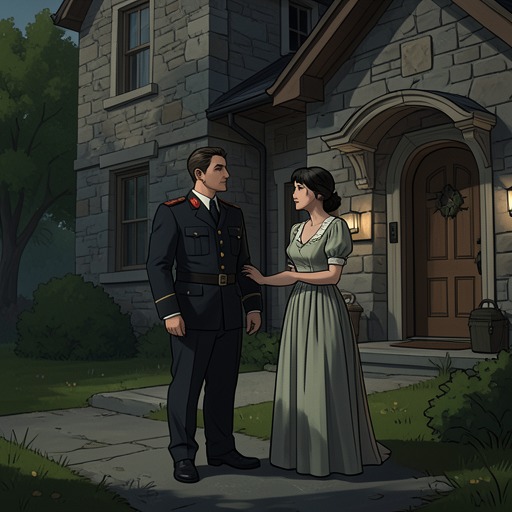
Barrymore makes the request personal as well as practical. He begs Sir Henry not to alert the police, warning that discovery would bring trouble on both him and his wife, Eliza Barrymore. He adds that his wife would be devastated if Selden were captured again. The appeal reveals the emotional cost the secret has already acquired within the household: helping Selden is not presented simply as an arrangement for hiding a fugitive, but as an act bound up with the Barrymores’ concern for his fate.
Sir Henry’s Decision
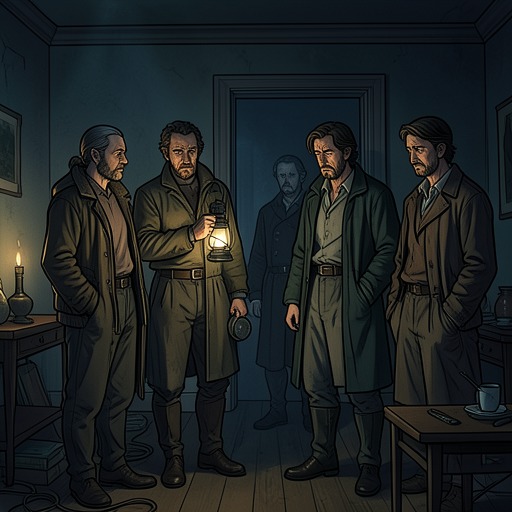
Sir Henry asks Dr. Watson for his view. Watson judges that Selden’s departure from the country would spare the taxpayer the burden of maintaining him, but Sir Henry considers the risk that the fugitive might rob someone before leaving. Barrymore answers that such a crime would expose the hiding place, reinforcing his claim that Selden has a reason to keep quiet. The exchange tests the distinction between legal duty and immediate humanitarian judgment: the possible danger is acknowledged, not dismissed, but Barrymore’s account persuades Sir Henry that disclosure is not necessary.
Sir Henry finally lets Barrymore go, accepting that the fugitive will remain concealed while preparations for his departure proceed. He recognizes that he and Watson may be aiding and abetting a felony, yet says that, after hearing Barrymore’s explanation, he cannot bring himself to give Selden up. His decision makes the secrecy a choice shared by the household rather than Barrymore’s private undertaking alone. Barrymore’s broken words of gratitude register the relief of a man who has asked for a consequential favor and received it.
The Secret Becomes a Source of Information
As he is leaving, Barrymore hesitates and returns with information about the death of Sir Charles Baskerville. He says that he discovered it long after the inquest and had never told anyone. His offer to help in return for Sir Henry’s kindness gives the concealment a further consequence: the household’s decision not to expose Selden prompts Barrymore to disclose a separate secret relevant to the investigation. The favor does not erase the legal breach, but it changes what the others know and what Barrymore is willing to reveal.
The exchange also shows how the secret is managed through selective speech. Barrymore asks that the police not be told Selden remains on the moor; Sir Henry agrees, and the fugitive’s whereabouts stay outside official reach. Later, Sherlock Holmes instructs Dr. Watson not to tell Sir Henry about the hound, allowing him to believe Selden’s death occurred as Stapleton wished him to believe. The concealment surrounding Selden therefore persists beyond Barrymore’s initial plea, shaping what Sir Henry is permitted to know while the danger to him continues.
Later Consequences and Legal Exposure
After Selden dies, Sherlock Holmes reveals that the dead man was dressed in Sir Henry’s clothes and that a servant had given them to him. Sir Henry observes that the clothes bore no mark, and Holmes warns that the household is on the wrong side of the law in the matter. The earlier account—that Selden had been provided with everything he needed—now has a sharper implication: assistance included clothing, and the disguise helped make Selden’s death appear to be Sir Henry’s. The evidence identifies the giver only as a servant in this exchange, but, read alongside Barrymore’s admission that the household supplied Selden, it places the clothing within the same network of aid.
Holmes also says that Dr. Watson’s reports are incriminating documents and raises the possibility of arresting the household. The assistance has thus produced consequences beyond the risk Barrymore initially named: the effort to protect Selden exposes the Barrymores and Sir Henry to legal jeopardy, while Selden’s clothes become part of the mistaken account of who has died. Barrymore’s act is compassionate in its stated purpose, but the plot binds that compassion to concealment, evidence, and danger.